

Introduction
The Ashanti tribe, also known as the Asante people, is one of the most historically significant ethnic groups in West Africa. Located primarily in the Ashanti Region of Ghana, the Ashanti people are famous for their rich cultural heritage, powerful historical kingdom, traditional leadership, colorful clothing, and distinctive customs.
For centuries, the ashanti tribe Kingdom played an important role in the political, economic, and cultural development of West Africa. Its influence became particularly strong during the 18th and 19th centuries, when the kingdom developed into one of the region’s most powerful states.
Today, the ashanti tribe people continue to preserve their traditions, language, festivals, and cultural identity. Their history provides an important insight into African civilization and the development of traditional societies.
Who Are the Ashanti People?
Ashanti tribei people are an ethnic subgroup of the larger Akan ethnic group in Ghana. They are commonly called Asante, which is the preferred traditional spelling.
Most ashanti tribe communities are concentrated in central Ghana, particularly around Kumasi, the historic capital of the Ashanti Kingdom.
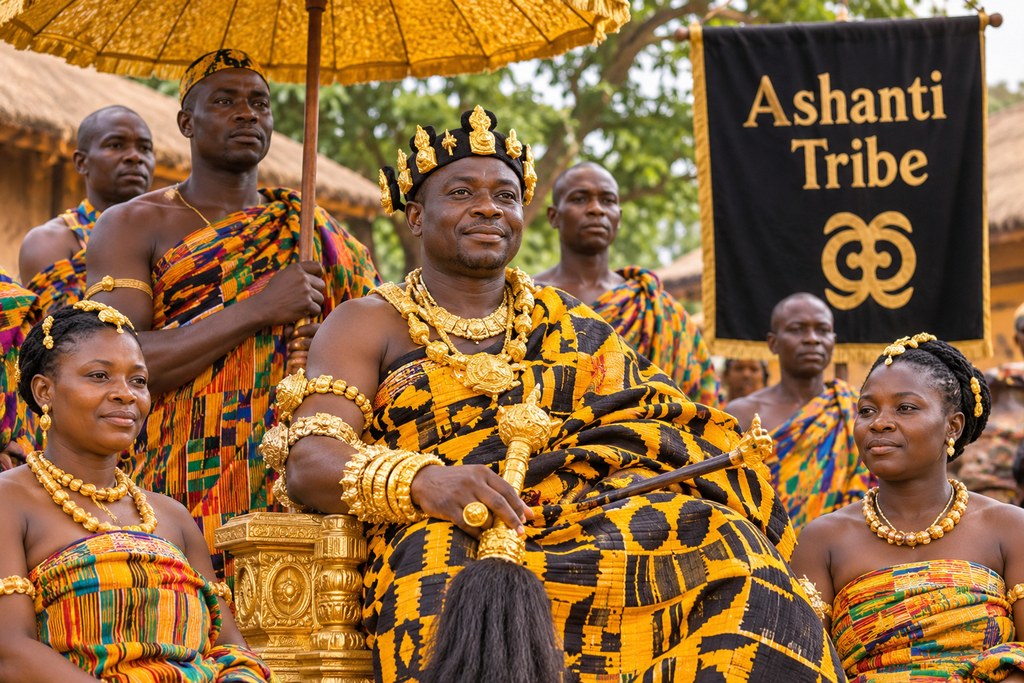
The community is recognized for its strong traditional institutions, extended family relationships, craftsmanship, and cultural celebrations.
The ashanti tribe people have maintained many of their customs while participating in modern Ghanaian society.
Where Is the Ashanti Tribe Located?
The ashanti tribe people primarily live in the Ashanti Region of Ghana, located in the central part of the country.
Kumasi is the region’s capital and serves as an important center of Ashanti history, politics, commerce, and culture.
Other communities throughout the region also contribute to the preservation of traditional Ashanti customs.
Although many ashanti tribe people live in Ghana, members of the community can also be found in different parts of the world through migration and international communities.
History of the Ashanti Tribe
The history of the Ashanti people is closely connected to the development of the Ashanti Kingdom.
During the late 17th century, several Akan communities came together under the leadership of Osei Tutu I.
With the guidance of the influential priest and adviser Okomfo Anokye, Osei Tutu helped establish a unified political system.
Around 1701, the ashanti tribe Kingdom emerged as a powerful state, with Kumasi serving as its capital.
The kingdom expanded its influence through diplomacy, trade, and military campaigns. It became particularly important in regional commerce, including the gold trade.
The Ashanti Kingdom and Its Golden Age
The ashanti tribe reached its greatest influence during the 18th century.
It developed an organized political structure, strong trade networks, and a sophisticated system of traditional authority.
Gold was especially important to the kingdom’s economy and international relationships.
The kingdom also became known for its craftsmanship, royal ceremonies, traditional architecture, and artistic achievements.
Its influence extended across large areas of what is now Ghana.
The Golden Stool: A Symbol of Ashanti Identity
One of the most important symbols of Ashanti culture is the Golden Stool, known as the Sika Dwa Kofi.
According to ashanti tribe oral tradition, Okomfo Anokye caused the Golden Stool to descend from the sky during the reign of Osei Tutu I.
The stool represents the collective spirit, unity, and identity of the Ashanti people.
It is considered sacred and is not simply a royal seat.
Its importance remains central to Ashanti traditions and royal ceremonies.
Ashanti Language
The ashanti tribe people traditionally speak Asante Twi, a variety of the Twi language within the Akan language family.
Twi is widely spoken in Ghana and is used in everyday communication, storytelling, traditional ceremonies, and cultural activities.
Language plays an important role in preserving Ashanti identity because it carries historical knowledge, proverbs, folklore, and traditional expressions.
Some common Twi expressions include:
- Akwaaba – Welcome.
- Medaase – Thank you.
- Maakye – Good morning.
Ashanti Culture and Traditions
Ashanti culture is known for its artistic creativity, family traditions, respect for elders, and traditional institutions.
Cultural knowledge is passed from one generation to another through storytelling, festivals, music, dance, and community activities.
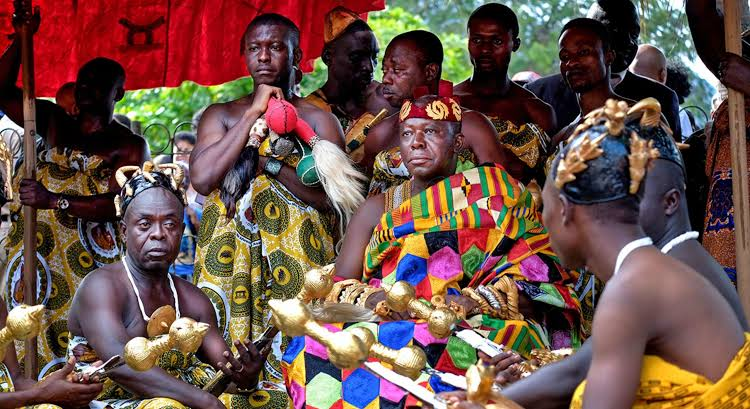
Traditional ceremonies often include drumming, colorful clothing, symbolic objects, and public gatherings.
These practices help maintain connections between the past and present.
Ashanti Traditional Clothing
Traditional clothing is an important part of Ashanti cultural identity.
One of the most recognizable textiles associated with the community is Kente cloth.
Kente is a colorful woven fabric featuring intricate patterns and designs. Different patterns and colors can communicate ideas, values, and cultural meanings.
Historically, Kente was strongly associated with royalty and important occasions. Today, it is worn during celebrations, weddings, festivals, and other special events.
Ashanti Religion and Spiritual Beliefs
Traditional Ashanti spirituality is part of the wider Akan religious tradition.
Historically, the Ashanti people recognized a supreme creator, commonly called Nyame, alongside spiritual beings and ancestral connections.
Ancestors hold an important place in traditional beliefs, and spiritual practices have historically been connected with community responsibilities and cultural ceremonies.
Today, Ashanti communities include people who practice Christianity, Islam, and traditional African religions.
Ashanti Family Structure and Society
Family relationships are central to traditional Ashanti society.
The community traditionally follows a matrilineal system, meaning family membership and inheritance are traced through the mother’s lineage.
This system gives an important role to women in family identity, inheritance, and social organization.
Extended family relationships also connect different generations and strengthen community responsibilities.
Ashanti Festivals and Celebrations
Festivals are an important part of Ashanti cultural life.
They provide opportunities for communities to celebrate their heritage, honor their ancestors, and strengthen relationships.
1. Akwasidae Festival
Akwasidae is an important traditional celebration associated with the Ashanti royal court.
It takes place according to the traditional Akan calendar and involves ceremonies honoring ancestors and the Golden Stool.
2. Adae Kese Festival
Adae Kese is a major traditional festival associated with the Ashanti people.
It is connected with royal traditions, ancestral remembrance, and the history of the kingdom.
3. Kente Celebrations
Kente weaving and cultural displays are important expressions of Ashanti identity.
Communities celebrate the artistry and heritage associated with this traditional textile.
Ashanti Art and Craftsmanship
The Ashanti people have a long history of artistic achievement.
Their traditional crafts include:
- Gold jewelry and ornaments.
- Kente weaving.
- Wood carving.
- Brass and metalwork.
- Traditional stools.
- Decorative architecture.
Goldsmithing became particularly important because of the kingdom’s historical relationship with gold production and trade.
Ashanti artisans developed recognizable designs that continue to attract cultural interest.
Ashanti Traditional Architecture
Traditional Ashanti architecture is another important part of the community’s heritage.
Historic buildings near Kumasi feature materials such as wood, bamboo, and mud plaster.
Many structures contain decorative designs inspired by traditional symbols, plants, animals, and spiritual beliefs.
UNESCO recognizes the Asante Traditional Buildings as an important World Heritage property.
These buildings preserve valuable evidence of the kingdom’s architectural and artistic traditions.
Famous Historical Figures of the Ashanti Tribe
Several historical figures played important roles in Ashanti history.
Osei Tutu I
Osei Tutu I was the founder of the unified Ashanti Kingdom. His leadership helped establish a centralized political system.
Okomfo Anokye
Okomfo Anokye was a respected priest, adviser, and traditional figure associated with the foundation of the kingdom and the Golden Stool.
Yaa Asantewaa
Yaa Asantewaa was the queen mother of Ejisu who became famous for leading resistance against British colonial forces during the War of the Golden Stool in 1900.
Her leadership remains an important symbol of courage and resistance in Ghanaian history.
Prempeh I
Prempeh I was an important Ashanti ruler whose reign coincided with increasing British colonial pressure. He was exiled by the British in 1896.
Ashanti Tribe and British Colonial History
During the 19th century, the Ashanti Kingdom experienced several conflicts with British colonial forces.
These conflicts were connected to political independence, territorial influence, trade, and control of the region.
The War of the Golden Stool began in 1900 after British Governor Frederick Hodgson demanded access to the sacred Golden Stool.
Yaa Asantewaa became a central figure in the resistance.
Although the kingdom eventually lost its political independence, Ashanti cultural identity and traditional institutions continued to survive.
Ashanti Tribe Today
Today, the Ashanti people remain an important part of Ghana’s cultural and social landscape.
Kumasi continues to serve as a major center of Ashanti heritage.
Traditional leadership, festivals, language, music, clothing, and craftsmanship remain important expressions of community identity.
The Ashanti people also participate in modern education, business, politics, arts, and international activities.
Their cultural heritage continues to attract historians, researchers, and visitors interested in African history.
Interesting Facts About the Ashanti Tribe
Here are some interesting facts about the Ashanti people:
- The Ashanti are part of the larger Akan ethnic group.
- Their traditional capital is Kumasi.
- Asante Twi is their traditional language.
- The Golden Stool symbolizes Ashanti unity.
- Osei Tutu I helped establish the Ashanti Kingdom.
- Okomfo Anokye is associated with the Golden Stool tradition.
- Yaa Asantewaa led resistance against British colonial rule.
- Kente cloth is an important part of their cultural heritage.
- Traditional Ashanti society follows matrilineal descent.
- UNESCO recognizes the historic Asante Traditional Buildings.
Conclusion
The Ashanti tribe represents an important part of Ghana’s history and cultural identity. From the powerful Ashanti Kingdom to the sacred Golden Stool, the community has developed traditions that continue to influence modern Ghanaian society.
Its language, festivals, clothing, craftsmanship, and traditional leadership demonstrate the richness of its heritage.
Although the political power of the historical kingdom changed during colonial times, the Ashanti people have preserved many of their cultural practices. Their history remains an important chapter in understanding West African civilization.
